
Studying Abroad is Good for You…Literally

I get asked time and time again, “If you had the chance, would you study abroad again? Or, “Was studying abroad a good experience for you?” I always answer yes to both of these questions. I love traveling and having cultural experiences and this is what I attribute to my happiness. But even if I weren’t this way, I would still study abroad. From my personal experience and talking to people I met abroad, studying abroad is what broadens your worldview and makes you more understanding of people. These are qualities that I believe are necessary because our lives are involuntarily becoming more global each day. It turns out, there’s even research that backs the positive effect studying abroad has on a student. The Association of American Colleges & Universities  conducted a research study in 2017 to help highlight the facts and figures that come from students studying abroad.

“Global learning, whether it occurs in local communities or abroad, provides an array of skills and experiences that follow students throughout their civic and professional lives.”

Improves Interpersonal Skills

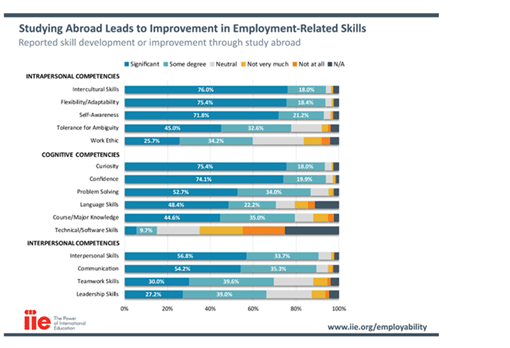
Social skills are not just important in our social lives. It’s all just as important in the workplace. Studying abroad has helped students all over the world sharpen these skills. These are the findings from AACU:

  • majority of respondents said that their study abroad experiences improved skills in fourteen out of fifteen “key skills desired for employment in today’s workforce.” Technical and software skills were the least likely to be developed
  • Approximately three-quarters of respondents saw “significant” gains in several areas: intercultural skills, flexibility/adaptability, self-awareness, curiosity, and confidence.
  • More than half of respondents also reported significant gains in problem-solving, interpersonal, and communication skills.
  • Study abroad experiences that were highly structured, and especially experiences that included group projects and activities, “emerged as a common factor among [respondents] reporting significant gains in collaborative, interpersonal, teamwork, and leadership skills.”
  • Life and physical science majors were the most likely to study abroad in an academic field outside of their major. In interviews, these respondents “often described study abroad as one of the only opportunities during their undergraduate studies to develop skills like flexibility, written and verbal communication, interpersonal skills, and intercultural skills.”
from http://www.aacu.org

Improves Career Outcomes

  • More than three-quarters (78 percent) of survey respondents said they discussed their study abroad experience in a job interview, and 53 percent said that their study abroad experience helped them secure a job offer.
  • Students who considered their career prospects when choosing a study abroad experience were more likely to say that the experience had an impact on their career. The report recommends that global learning programs “integrate clear employment-related learning outcomes into the design of study abroad programs.”

It is very rare that a research study can provide 100% positive findings. The data from this study helps me describe how studying abroad changed my life and others lives too. We’re in a time of uncertainty right now, a time where we’re not sure if studying abroad will be nearly as encouraged again. But I believe that one day, even if it’s 20 years from now, it will. If you’re not interested in studying internationally, there are also many opportunities that allow for you to study domestically. If you’re in the US, there are many opportunities to study in another state. If you’re interested in studying abroad and need more information on doing so, contact your school study abroad or global education office.
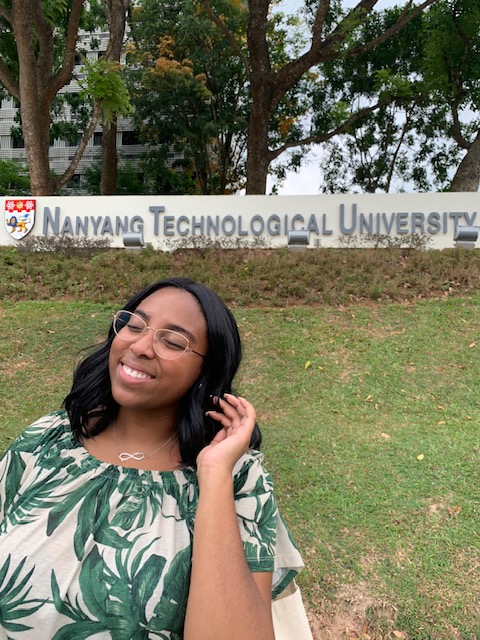
What is it Like? Preparing to Study Abroad at NTU as an American Exchange Student

If you were to ask me today, “On a scale from 1-10, can you rate your overall experience studying at Nanyang Technological University as an American exchange student?” I would respond with a solid 8.5! Which is very good, I might add, being that I was in a foreign country, on the other side of the world, without family and friends for 5 months! I assure you this is a fantastic score indeed. But, if you were to ask me to rate preparing, as well as my first couple weeks at NTU, you would get a rating much closer to 2. And this is why.

Limited Support from My Home University

My situation was quite different from most exchange students in this program, unfortunately the support I was counting on in the beginning from my school’s study abroad office in America was no more. The school decided to dissolve the office right before my departure and provided me with a new person as support. I won’t name any names, but this person was extremely absent for most of my time abroad, meaning with the many times I would contact them, they never responded to me. So, I had to get creative.

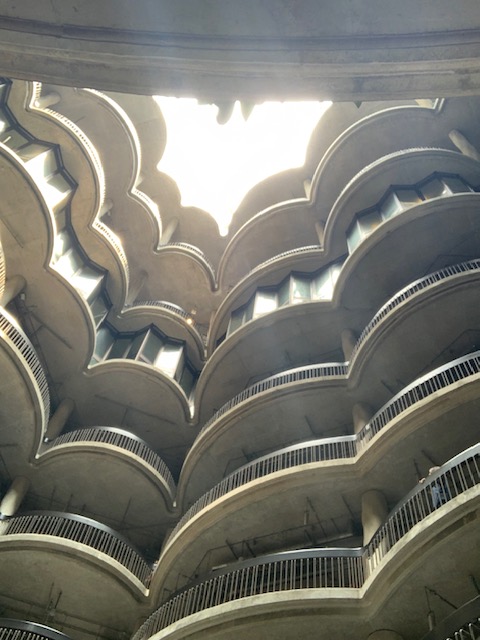
The Hive at NTU

My tip for you, if you’re interested in studying abroad, and feel there’s limited resources initially provided to you, is to not allow this to influence your decision. There’s a way to get through it and it works. I recommend finding two or three people from your school with authority in other areas, as it relates to your education, and keep in touch with them throughout your entire exchange. For instance, in my case, I stayed in touch with my department’s co-chair as well as the provost of academic services. I understand that these people sound quite important and busy, and it is true they certainly are, but they were more than willing to help me because I was taking the initiative. I was serious about enjoying my experience and attending classes; this made them want to be serious about helping me. Be sure to check out the NTU site to stay on top of pertinent information relating to the program.

Uncertainty with Registering for Classes

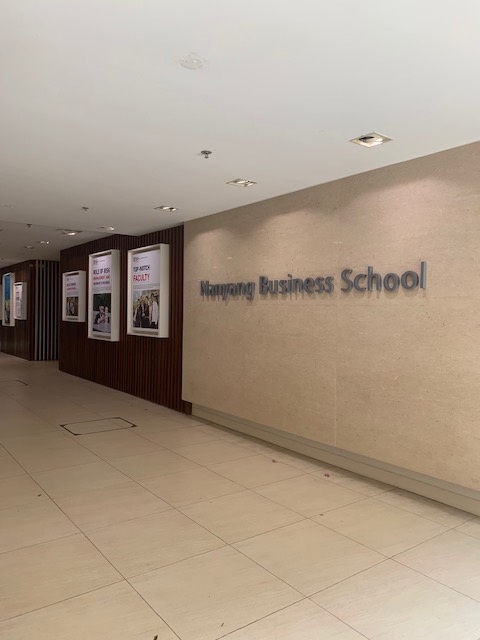
Unfortunately, something they don’t tell you ahead of time, is how difficult it can be to register for classes. I don’t want to deter you from choosing NTU as your study abroad uni, but I believe it is important to remain transparent about the experience. For students like me (a student of the business school) or students apart of any of the more popular colleges there is a major battle with getting registered for classes. I want to warn you, you’re going to request courses months before you leave for Singapore, but do not count on taking these courses, there will most likely be changes. So, in order for you to be more prepared, I want to highly recommend that you select at least 10 courses and no less. Also, be sure to get all of these approved by your school, I promise you will feel much more prepared by doing this. It’s a major headache going all the way to Singapore and then finding out you haven’t been approved for any courses because there’s no room left in them.

Man, it’s Hot in Singapore

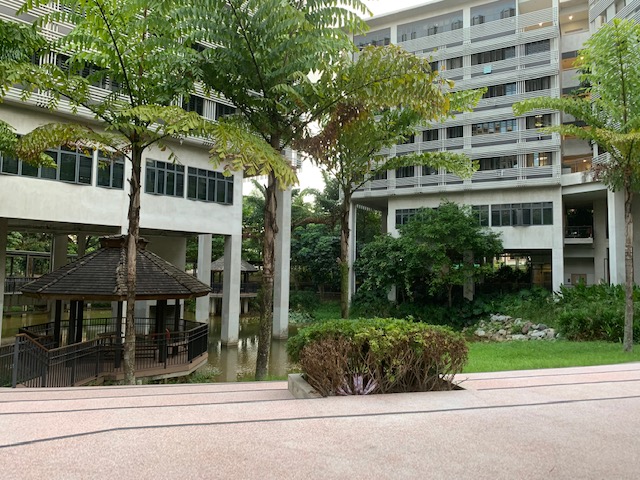
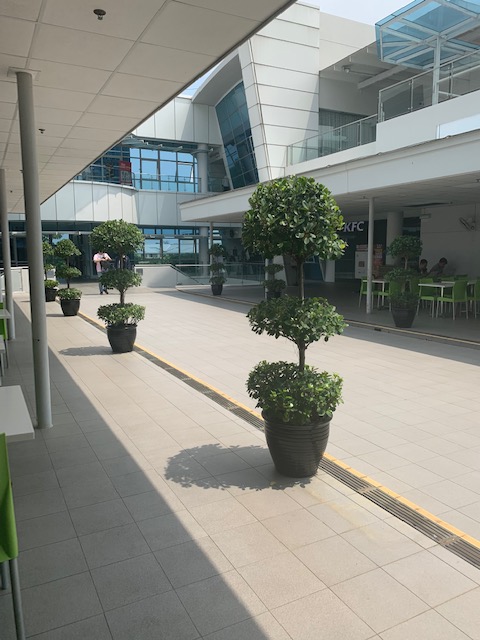
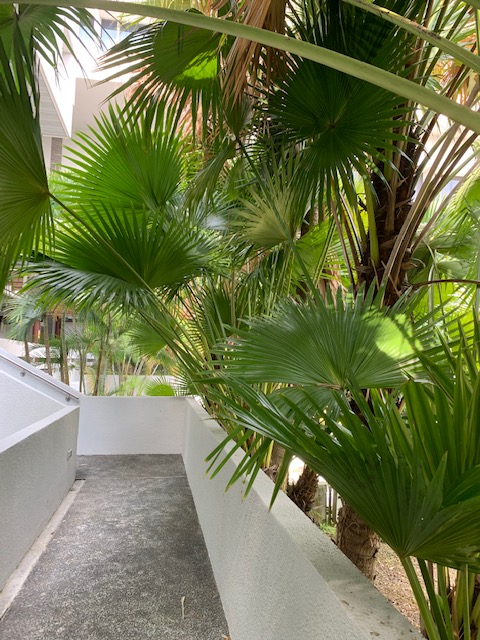
What you may not be prepared for and have little to no control over, is the overwhelmingly warm temperatures in Singapore. Check out these tips on how to make Singaporean heat a bit more manageable. It hardly is ever below 70 degrees Fahrenheit  and can be pretty humid and sticky. Coming from America, we barely see these kinds of temperatures, and certainly not year round, so be prepared for it. I personally didn’t mind the warm temperature, but many were struggling to bear it. There are some really good things about it being so warm though, NTU has an outdoor pool regardless of what time of year it is, and endless amounts of sports that you can join too. The weather is also what contributes to the lushness of the campus; I honestly have never seen a more beautiful campus with all of the flora and fauna that lives there.

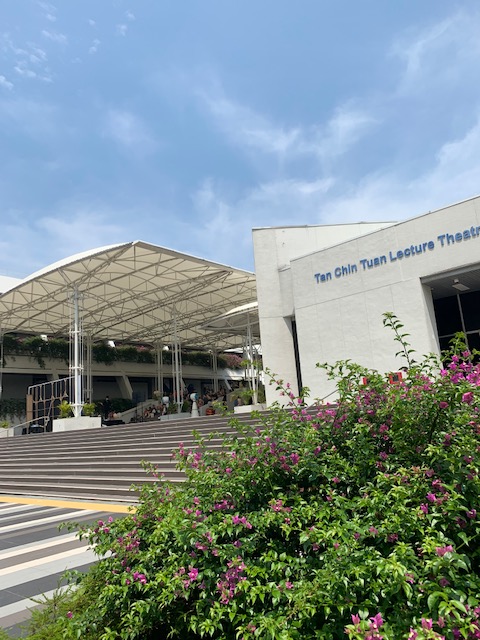
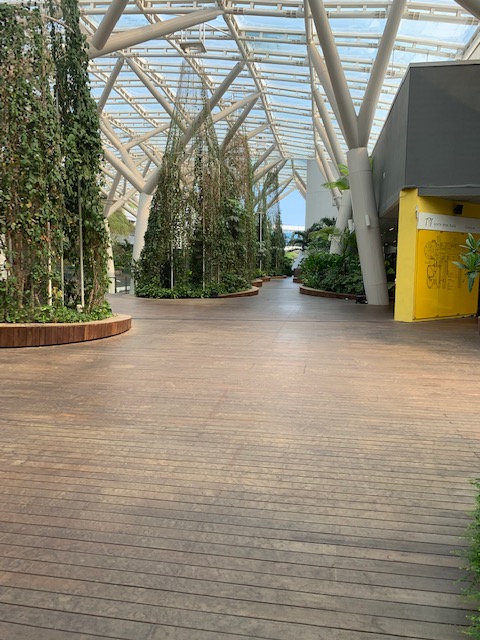
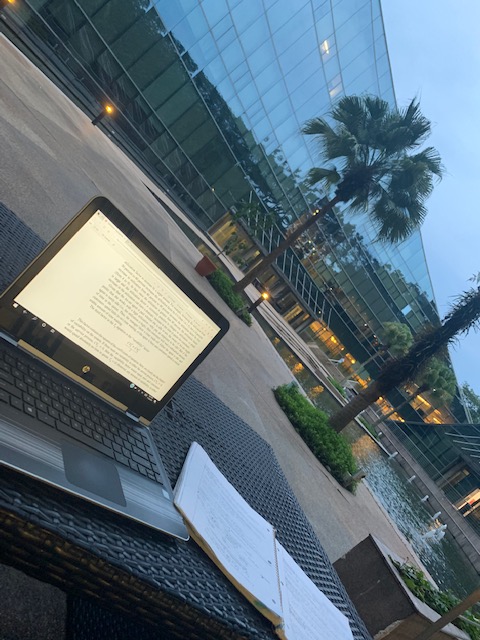
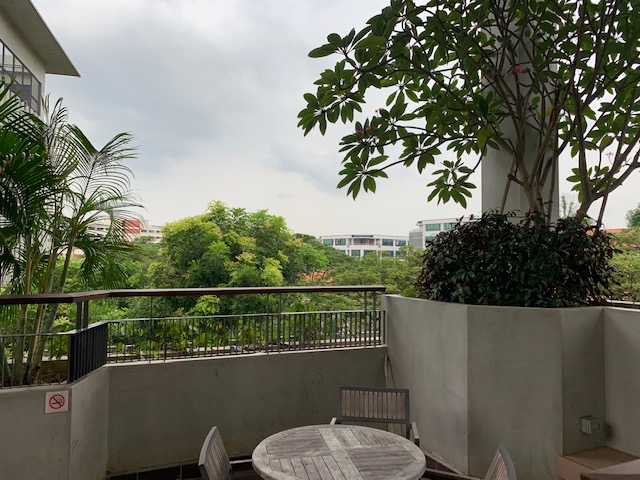
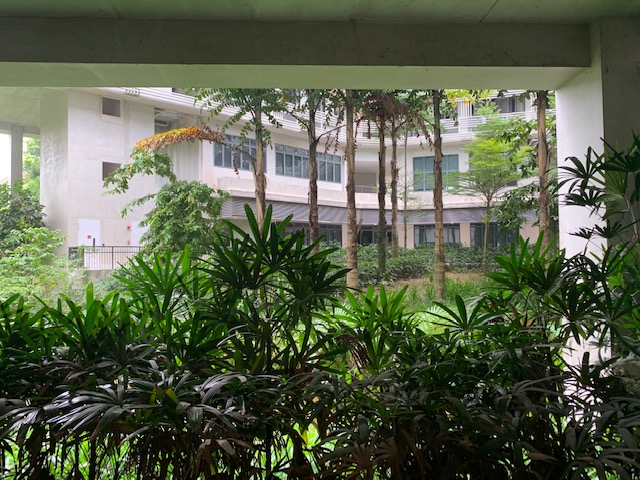
Enjoy some more photos of the beautiful Nanyang Technological University campus!

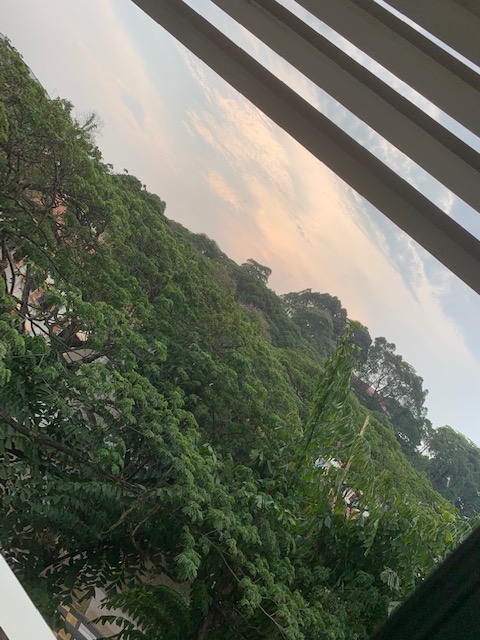
View outside my dorm’s window at Crescent Hall
North Spine at NTU
Studying in a tranquil oasis at the Art & Design Building
View from Crescent hall’s balcony
North Spine food court area

The Rules are the Rules – Studying Abroad in Singapore

Before leaving for Singapore last fall, anytime I would mention to both strangers and acquaintances alike that I was getting ready to study abroad in Singapore, they all had the same reaction, “What?! Isn’t it super strict there? So strict that you can’t even chew gum?!” And my quick response would always be yes. Their reactions caused me to do all of this obsessive research, before leaving, on the rules and the penalties for breaking those rules and personal stories relating to breaking the rules… It was honestly quite intimidating at the time.

Now that I have returned from spending five months in Singapore, as an exchange student, I can honestly say while all of these rules are very real and enforced…probably, there was never a moment where I felt watched or bothered by being in Singapore due to these rules.

This post is meant to be both informative, but also lighthearted because I think rules shouldn’t be intimidating, but rather looked at as helpful and orderly laws that are implemented for the general public’s safety and comfort. After all, Singapore is credited as being one of the world’s safest and cleanest cities.

After watching this humorous yet informative video on YouTube from Asian Boss, I realized there are rules that Singaporeans aren’t even aware of in Singapore.

Check that out here:

Here is a quick run down of the rules that were mentioned in the video:

No Gum Selling or Chewing

Chewing gum in Singapore is illegal and while the personal chewing of it doesn’t have a direct consequence, if a person is caught disposing of chewed gum anywhere other than a trash can or is caught carrying large amounts of it (most likely will be considered smuggling) will result in an SGD $1000 fine if you are caught by an officer.

No Loud Singing in Public Without a Permit

Singing in public is only allowed for those who can do it – literally… a person must have a permit in order to be allowed to sing outwardly. If the person is caught by police without a permit to do so, they may be imprisoned for at least 3 months.

Don’t Connect to Another Person’s Wi-Fi Without Their Permission

A person’s Wi-Fi is considered their property, so when a person chooses to connect to a Wi-Fi network without the permission of the owner, that is considered trespassing which is illegal. Therefore, the consequence for doing this, if caught, is an SGD $10,000 fine or three years in prison.

Always Flush the Toilet!

If a person is caught using the toilet and not flushing afterwards, they could be subjected to paying an SGD $150 fine. However, it’s not entirely clear how this is enforced nor monitored…

Study Abroad 2 Learn: Supertree Grove

Photo by Brea Harris


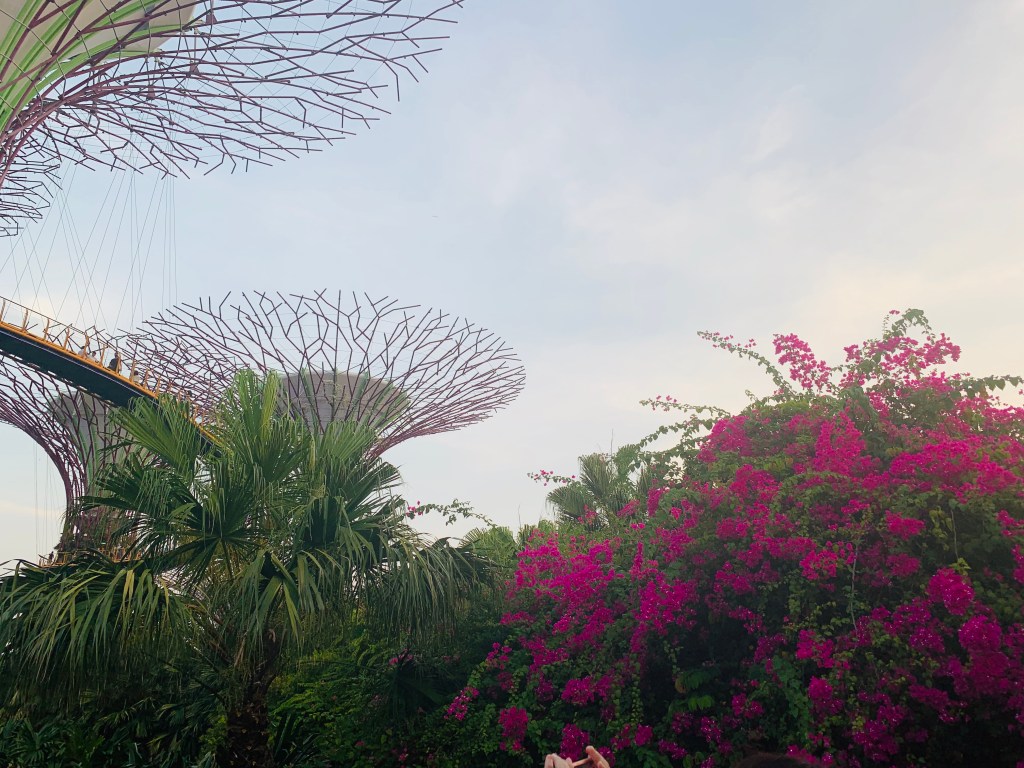
Today’s SA2L post, is all about Singapore’s magnificent Supertree Grove. I had the pleasure of experiencing this at least three different times and everytime I went, there was something new that I hadn’t noticed before. I was in awe each time while there, and was in awe even more after taking some time to research the reasoning behind the very existence of these so called Supertrees.

First thing – there’s way more to this attraction than just pretty lights, flora and fauna, and weird gianormous robotic looking trees. These were created for a very specific purpose and contribute immensely to Singapore’s initiative in making their city in a garden rather than the other way around. The Supertrees are obviously man-made but they make an amazing difference to the environment by utilizing the energy of the sun and then converting that energy to power up numerous conservatories that are below the trees.

You see, these gigantic trees are particularly eye-catching but the trees are actually apart of something much larger which is the garden itself, “Gardens by the Bay.”

Photo by Brea Harris

The trees supply this energy to two large conservatories made up of plants that come from various parts of the world:

“The biomes are the equivalent size of four football fields and will become the new home for 220,000 plants from almost every continent.” “The remainder of the Bay South garden will pay homage to the ethnic makeup of the country. In the Heritage Gardens, visitors can explore the Chinese, Malay, Indian and Colonial-themed areas and learn about the links between plants and Singapore’s history.” 

–          CNN, Lauren Said-Moorhouse 

This part of the garden does cost, while walking around and viewing the Supertrees Rhapsody show is free admission.

The Supertree Grove is an impressive science and environmental project indeed, but it also acts as an extraordinary space for entertainment as well. Every night, there’s two shows and the supertrees are the stars – literally! This includes an impeccable 15-minute light show set to music that is different each weekend. The three times I visited, I experienced a Singaporean music themed show (in honor of Singapore’s Independence Day on August 9th), a Disney music themed show, and a musical theater themed show. I loved them all and fell into an intrinsic trance while laying down in the vast grass field below staring into the sky while the lights danced on the tree’s branches.

Photo by Brea Harris